Goddess Calling by Karen Tate

Goddess Calling: Inspirational Messages & Meditations of Sacred Feminine Liberation Thealogy
Karen Tate
Changemakers, 2014

sw087_nonfiction_Meenee-Harita_Goddess-Calling_Inspirational-Messages-and-Sacred-Feminine-Liberation-Thealogy

Review by Harita Meenee.

Sometimes a touch of inspiration is what we need to transform our mundane reality and infuse us with the energy of the Sacred. Karen Tate’s new book, Goddess Calling, does precisely that — and a lot more. Going through its nearly two hundred pages was a powerful and uplifting experience. I felt profoundly touched by the thoughtful and empowering views in this book: it calls out to everyone supporting the ideals of the Sacred Feminine to make a difference in the world. In her words, it is time to “find our sacred roar.”

The author is an ordained minister, author, radio show host, independent scholar, and social justice activist, who does not mince her words when it comes to politics. In Goddess Calling, Karen speaks out against corporate greed and right-wing conservatism, denouncing capitalism as a system of exploitation and discrimination, harming both humanity and the whole of the planet. We need such courageous voices, which urge us to take action.

While the author acknowledges and uses the power of ritual and meditation, she also challenges us to reexamine our old ways of thinking and break out of restricting patterns. Over the years, the author has successfully shared the messages and meditations in the book with a large number of people. She has presented related papers in academic conferences and lead services in festivals, Goddess temples, and Unitarian Universalist congregations. Through Goddess Calling, Karen has made her inspiring, transformational work available to all of us.

Want to buy this book?

The Witch by Ronald Hutton

The Witch: A History of Fear from Ancient Times to the Present
Ronald Hutton
Yale University Press, 2017

wp36 the witch hutton

Review by John Kruse.

Ronald Hutton — for the rare reader who isn’t already aware of him — is a professor of history at Bristol University. Hutton is as well known for TV appearances as for his writings on folklore, pagan religions, druidry, shamanism and folk festivals. This book, his study of the history of witchcraft, was awaited with anticipation because of his reputation for academic rigor combined with a balanced approach to his esoteric subjects.

I must start with a word of warning for potential readers. Hutton spends as much time comparing and contrasting other academics’ ideas on his subject as he does examining the evidence himself. Be prepared for a very scholarly format, and a great deal of reference to previous books and journal articles. It can be a bit daunting and, if you don’t have access to the sort of library holding these materials, a bit frustrating as well.

That said, if you are looking for a comprehensive overview of the practices of witchcraft and popular views about witches over the centuries, this weighty book is a good starting point. Hutton surveys witchcraft across the globe and from the earliest times, taking in the ancient Near East, African and Native North American cultures. After the first few chapters, though, his focus narrows to (mainly Western) Europe and a lot of his evidence on witch trials and on fairy lore is specifically British.

Hutton suggest five characteristics that help define a “witch.” Four beliefs are customary: that witches exist; that they can cause harm to individuals by uncanny means; ; that witches work within an inherited tradition; and that they are evil, but can be resisted. Hutton also introduces the concept of “service magicians” or what one might call “good witches,” magical specialists who fought against malicious witchcraft. Hutton’s definition of the word “witch” is based in history and folklore, and is quite distinct from that espoused by modern, nature-based religions, which he describes as “thoroughly worthwhile.”

The Witch contains fascinating information about the evolution of witch beliefs during the middle ages in Italy, France, and Germany. This period provided the foundations for many images (broomsticks and sabbats, for example) associated with witchcraft to this day. Of particular interest was the section on the “hosts of the night” who would visit homes, blessing or cursing the inhabitants dependent upon whether or not food and drink were left out for them.Hutton suggests these beliefs as the origin of the British idea of fairies who visited homes and would reward or punish according to whether the house was tidy.

Hutton describes the fact that the medieval church was a good deal more tolerant than its successors. Hutton suggests that this reflects the dominance and power of Catholicism in the middle ages, and notes that the Great Witch Hunts occurred during the chaos and uncertainty of the Reformation period.

I especially enjoyed the chapter on witches and ceremonial magic: I’m interested in spells for conjuring fairies but these are clearly linked to the work of magi like John Dee and may be traced back to Egyptian magical practices.

Turning to chapter 8 on fairies — my main reason for reading the book — Hutton offers an overview of the evolution of English fairy belief from 1200-1600 and examines the association between fairies and witches. His sketch of the development of British ideas as to the nature of fairies draws on a wide range of literary as well as folkloric sources, but underplays the native roots of the belief and is inclined to ascribe too much to quite late continental imports.

As for the relationship with fairies claimed by some witches, I believe that Hutton gives undue prominence to accounts given under duress by defendants in witch trials. The claims of special healing powers from the fairies are fairly unusual and I wonder if there are better explanations. Hutton also speculates whether a belief in fairies made a society less susceptible to a belief in satanic witches. Ireland might be cited in favor of this proposal, but the evidence is very complex; leaving this as a subject deserving of further study.

All in all, Ronald Hutton’s The Witch is an erudite and demanding read, packed with information and resources for further study.

Want to buy this book?

Sacred Lands and Spiritual Landscapes

Sacred Lands and Spiritual Landscapes
Edited by Wendy Griffin
ADF Publishing, 2014

sw087_nonfiction_MacLeod-Sharon-Paice_Sacred-Lands-and-Spiritual-Landscapes

Review by Sharon Paice MacLeod.

This lovely little volume is an exciting and unique addition to the corpus of writing on NeoPagan Spirituality! It represents a selection of papers presented at Cherry Hill Seminary’s first Symposium, held in conjunction with the University of South Carolina following an earlier Pagan Studies Conference in Claremont, California. It contains a Preface by Holli S. Emore, the Executive Director of Cherry Hill, and an Introduction by “NeoPaganism’s favorite academic,” Ronald Hutton. The conference was held in 2013 and was entitled, “Sacred Lands and Spiritual Landscapes: The Cosmography of the Pagan Soul.”

The book contains six academic articles on the role of landscape in various aspects of NeoPagan belief and practice. The papers are each quite different from each other, and all are extremely interesting. Most of the presenters are Pagans and also academics, a trend that I (as another Pagan academic) am heartened to see.

Having Pagan Academics present and publish their work is an important step in having our religions taken seriously by those outside the movement. It also serves to show that we are smart, serious, and we know what we’re doing.

The first essay by Wendy Griffin discusses the role of land, community on the land, and landscape in the Feminist aspects of Paganism and Goddess worship. Sara Amis presents a charming essay on being a Southern Witch, adroitly presenting information about Southern folk magic and its relationship to Pagan magic.

Christina Beard-Moose presents some findings on her research on Pagan pilgrimage and moments of ecstatic connection, and Hayes Hampton writes about connections between Pagan rock and perceptions of the land and countryside. Elinor Predota shares some of her research on young Glaswegians’ response to urban parks and forest, followed by Jeffrey Albaugh’s essay on “Internal Dialogue with the Wild.”

Rather than providing a Pagan’s Digest Condensed Version of each paper, I strongly suggest you get a copy for yourself. By so doing, you will be supporting a Pagan Press and giving a boost to those who are not only swimming against the tide in terms of their religious beliefs, but also breaking new ground in academia. You’ll be glad you did.

Want to buy this book?

The Witch’s Book of Spirits by Devin Hunter

The Witch’s Book of Spirits
Devin Hunter
Llewellyn, 2017

wp36 witches book of spirits review cover

Review by Lisa McSherry.

A follow up to his previous work (The Witch’s Book of Power, Llewellyn 2016), The Witch’s Book of Spirits is an interesting and provocative look at the many inhabitants of the Spirit World.

Many witches see working with non-human beings as a vital part of their practice. I’m a witch who is not a medium: I do not easily, nor naturally, communicate with spirits. For these reasons, I’ll admit that much of what Hunter discusses has little meaning for me: the author and I don’t share a common understanding of the concepts involved. But many of the witches I know and work with do have more natural relationships with the spirits, and their knowledge helps me to evaluate Hunter’s expertise.

The Witch’s Book of Spirits guides the reader in working with spirits and developing mediumship-related abilities. The information is easily understandable and many exercises. Hunter constantly reminds the reader to take precautions, and provides techniques in how to keep unwanted spirits at bay or how to remove them if they refuse to leave. The chapter “Staying on Top” to be an excellent guide maintaining proper boundaries, and this chapter alone justifies putting this book into my must-read list for newcomers to the Craft.

The book is broken into three parts: “The Familiar Craft,” “The Spirits of the Art,” and “The Grimoire of the 33 Spirits.” At the end of chapters, Hunter includes journal topics to prompt exploration into the topics discussed. “The Familiar Craft” provides a massive amount of information on terminology and processes. Topics include flying, conjuring, safety, mediumship, and planes of existence. In “The Spirits of the Art,” Hunter names four most common types of spirits: angels, the dead, faeries, and demons. Finally, in “The Grimoire of the 33 Spirits or the Book of the VEXNA-KARI,” we go in a completely different direction. Channeled from his familiar Malach, Hunter kicks off this section with humorous personal reflection about the message he received from Malach and then the messages that came through afterward from the 33 Spirits.

A little vinegar with all this honey: the author truly believes that he doesn’t do “high” or “ceremonial” magic, even going so far as to say: “Ceremonial magic… is really the magic of the aristocracy.” I would agree with him that CM is very aristocratic and exclusive. Nonetheless, quite a few of his techniques and rituals are pretty darn formal … and ceremonial. I found The Witch’s Book of Spirits to be a useful and challenging work that will likely become a book I recommend frequently.

Want to buy this book?

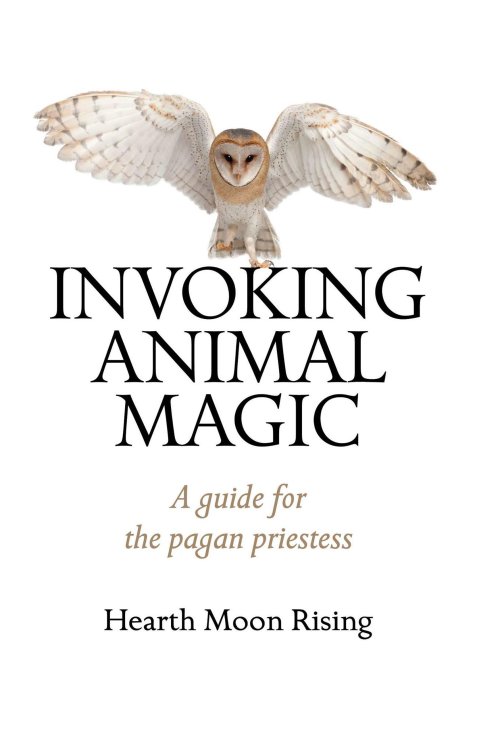
Invoking Animal Magic: A Guide for the Pagan Priestess

Invoking Animal Magic: A Guide for the Pagan Priestess
Hearth Moon Rising Moon Books, 2013

sw087_nonfiction_Linder-Leslie_Invoking-Animal-Magic_A-Guide-for-the-Pagan-Priestess

Review by Leslie Linder.

I admit, I was expecting this book to be the usual information about communicating with your magical kitty. While I enjoy that type of material too, Hearth Moon Rising gave a very academic and experiential accounting of several types of animals that I might not have thought of on my own. The book offers an in-depth study of nine animals: snake, bat, mouse, bear, owl, toad, spider, rabbit/hare, and dog/wolf. Surprised by some of them? I was. She also touches on other animals and insects of all sorts —including the noble cockroach!

“Magic” is defined in the text in two ways: as spell casting and also as connection to the divine. The author works with both types of magic when she gives us rituals to follow as well as pagan lore about each species. For instance, she goes into a great deal of detail about the difference between hares and rabbits.

The book is a mix of dense academic research, varied personal exercises, and well-written personal anecdotes. I was drawn in very early in the book by Hearth Moon’s description of a time when she lived in an earth-home. Three snakes slept by or under her bed (including a rattler). Her fear and curiosity culminated in a magical experience where she connected with one of the snakes while trying to remove it from her home. Instead, the two of them formed a spiritual bond. The way she came to co-exist with the snakes and intuitively connect with their magic is a good indication of the tone you will find in the rest of the book.

This author has really spent time researching the Pagan historical context of the chosen species. She has also interacted with living animals and done her work to connect with them. She has designed rituals, meditations, and journaling prompts in each chapter. These make for motivating individual study or for fun group work.

The historical or scientific aspects of each chapter may feel a little dense at times, but the material is well-paced, with personal stories and a humorous writing style. For instance, my favorite sentence in chapter eight (dealing with transformation and shape-shifting) is, “if it looks like a duck, it could still be a witch.”

I would recommend going through this book if you are a Pagan and an animal lover. You will deepen your understanding of the creatures around you in some very interesting ways. Even if it looks like a pest, it may also be a messenger from the Goddess. This book can help you discern the difference.

Want to buy this book?

The Witch’s Book of Shadows by Jason Mankey

The Witch’s Book of Shadows
Jason Mankey
Llewellyn, 2017

wp36 witches book of shadows review.jpg

Review by Lisa McSherry.

For so many witches, the Book of Shadows is a tool fraught with nervousness. My first BOS — a hardbound journal with a black cover — was deeply pretentious, written in Theban with an inkpen and using carefully chosen inks, a setup that lasted about a month before inertia took over and I stopped using it for several years. My near-daily journal of the time instead contains all of my memories and witch plans, along with typical musings about school and my relationships. For many reasons I love my first BOS but it wasn’t until the pretentiousness was eliminated that it became an actual tool. I suspect my situation is one many newcomers face, a suspicion borne out by my many students over the years who worry a great deal more about how their BOS looks, and less about what goes inside. A few authors have taken on the “How To Do a Book of Shadows” topic over the years, but not until Jason Mankey produced The Witch’s Book of Shadows do I think that it has been well done.

One of the best aspects of this book is that Mankey does a great job describing how a witch will have many Books over time, that they aren’t permanent but meant primarily to capture data that isn’t easily tracked. Practically speaking, his rituals for releasing old Books were good, as is the whole notion that you can start a Book and then transfer that data into a new Book as need arises or as new technologies become available. This is a great approach. Maybe Mankey’s words will help put a stake in the trap of perfectionism and get on with the real Work. He certainly takes the time to describe the pros and cons of many types of Book: journal, binder, cut-and-paste, and handwritten; all of which allows the reader to consider what will work best for them.
Mankey also does a good job discussing the many different options one can take when constructing their own Book and while construction and usage of the BoS take up a large part of this book, Mankey also delves into a brief history and talks about what the future may hold for them in this electronic age as well. I found the “Alphabets, Fonts, Inks, and Symbols” chapter helpful, as well as the “Cleansing, Consecrating, and Other Rituals” chapter. The chapter discussing the history of the Book (“Out of the Shadows”) was interesting and as a witch who works a great deal in a virtual environment, “New Frontiers and the BoS” was a oft-overlooked addition.

I do have a few small criticiscms: the focus is strongly Wiccan, although includes a surprising amount of Christian imagery and language. I call this out especially since it is part of a series (#5, in fact) of books for Witches in general. Many witches, including myself, are not Wiccan, so placing an emphasis on that path feels more than a little off-putting.

Of all the Witch’s tools, the Book of Shadows is the most personal. Mankey has done a great job making it accessible as well.

Want to buy this book?


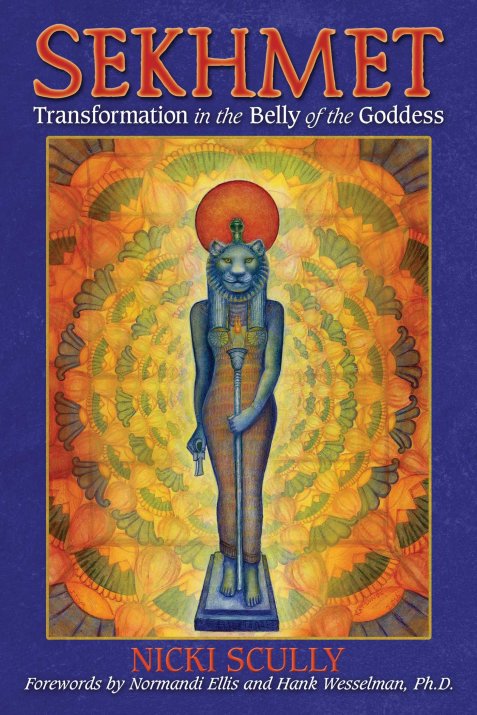
Sekhmet by Nicki Scully

Sekhmet: Transformation in the Belly of the Goddess
Nicki Scully
Bear & Co, 2017

wp36 sekhmet review

Review by Anthony Rella.

Nicki Scully codifies years of transformational work with Egyptian mysteries into this powerful book. Incorporating practical guidance on magic and transcriptions of guided meditation work, Scully presents her framework for readers to engage in their own transformational relationship with Sekhmet and the Egyptian gods. This kind of initiatory work is a worthy undertaking for students of magic or those interested in serving the gods and spirits, and Scully’s offering fills a need for those particularly interested in Kemeticism or Egpytian cosmology.

This process is quite thorough in its approach with great potential for personal healing, attested to by former participants in the work whose writings are included throughout the book. Each phase of the working leads participants to sense, name, and energetically connect to blockages in growth and development, then to dissolve these blocks, struggles, and obstacles within the transformative cauldron of the goddess’s belly.

Readers concerned about issues of cultural appropriation and blending approaches across cultural lines may take issue with Scully’s incorporation of concepts from multiple traditions and cultures into this work, including concepts from Vedic and Chinese traditions. Scully centers the Egyptian cosmology in this work, but in her efforts to construct a workable model appears to incorporate these other cultural concepts where relevant Egyptian constructs are absent or unknown.

Overall, this book is a worthwhile read for those interested in engaging in self-transformative work, Egyptian or Kemetic approaches to self-healing and magic, or those devotees of Sekhmet looking for deeper layers of connection and healing. People unfamiliar with paganism, polytheism, or Egyptian magic and practice may not glean much from the book unless they were willing to engage with its practices. Much of its potency happens off the page, in the reader’s engagement. While Scully does incorporate theoretical context and insight, the book is primarily a step-by-step detailing of the practices. It is not a dense book, but neither is it written for the casual reader.

Want to buy this book?

The Oxford Illustrated History of Witchcraft and Magic by Owen Davies

The Oxford Illustrated History of Witchcraft and Magic
Edited by Owen Davies
Oxford University Press, 2017

wp36 oxford illustrated history of magic review cover

Review by Jason Mankey.

This is a challenging — and mostly academic — look at magical traditions over the last 3,000 years. I’m a huge fan of Davies’ contributions to magical history, especially Grimoires: A History of Magical Books and Popular Magic: Cunning Folk in English History, and this volume is a solid supplement to that work. But because it’s a collection featuring several different scholars, the tone throughout is uneven, and some essays feel far more relevant and enlightening than others.

While reading Witchcraft and Magic, I couldn’t stop wondering who the intended audience for this book is. It’s far too academic for casual readers, and probably not in-depth enough for academics. Topics I was intimately familiar with (such as the emergence of the Modern Craft) felt like they were given short shrift, while things I was less interested in seemed to take up more space. Often times I felt as I were reading a text-book designed for college students enrolled in Religious Studies 101.

Readers looking for a history of Modern Witchcraft along the lines of Ronald Hutton’s The Triumph of the Moon will be mightily disappointed. Modern spiritual Witchcraft covers just eight or so pages, with no mention of Victor and Cora Anderson nor of the rise of “Traditional Witchcraft” over the last ten or so years.

I also found a chapter on “Witchcraft and Magic in Anthropology” somewhat uncomfortable. Perhaps it was fashionable to call the magic of the Azande people of Sudan “witchcraft” in the 1920’s, but I think we can do better today. I’m sure they have their own name for it, and translating native interpretations of magic to simply “witchcraft” feels limiting and reads as a desire to place everything in a Euro-centric box). We can and should do better.

Despite these criticisms, there are things about this book that I genuinely enjoyed. It’s an absolutely beautiful book: the images alone make this book worth flipping through, with many far outside the realm of “the usual” pictures one sees in books and articles about magical traditions.

The book is at its best when discussing the modern period, and the majority of the text covers the last 600 years or so. I once read that it takes about thirty years for new academic information to reach the masses, and anyone looking for up to date academic interpretations of Europe and North America’s Witch Trials will find them here. Davies’ own chapter on “The World of Popular Magic” is a welcome antidote to much of the unscholarly information currently floating around about cunning-craft and other forms of folk magic.

I highly recommend this book to anyone looking for an academic approach to society’s views on magic and witchcraft over the last several hundred years.

Want to buy this book?

Norse Goddess Magic by Alice Karlsdottir

Norse Goddess Magic: Trancework, Mythology, and Ritual
Alice Karlsdottir
Destiny, 2015

wp36 norse goddess magic karlsdottir

Review by Shirl Sazynski.

It’s rare to find a beginner’s book on adept-level magic, let alone one that is well-organized, grounded, easily understood, and part of Heathenry. Norse Goddess Magic is exactly that, focusing on visionary and trance work, known to the Norse as seidhr and utiseta. It serves both as an introduction for those who have great difficulty entering trance, and provides a rare compendium of Norse goddess lore that’s useful even if you have no interest in trance work.

True to its title, this book explores the “Mother” Goddess Frigg and her twelve divine “friends” : Eir, Saga, Gna, Gefjon, Snotra, Lofyn, Sjofyn, Var, Fulla, Hlin, Syn and Vor. Karlsdottir invites personal experience with them as real people through guided journeys, invocations, and rituals. Since little is known from the Eddas about these twelve “minor” Goddesses, this book helps the reader fill in those gaps with their own experience. By exposure to — and comparison with — the trance experiences of others, it also helps in expanding upon the lore. The emphasis in this book on forging and strengthening relationships with the Gods is spot on.

This is a guide to beginning seidhr techniques, including a basic understanding of how to use myth and ritual structure to enhance entering trance, remain there, exit peacefully, and take good care of yourself afterward. The techniques covered open this oft-misunderstood realm of Asatru and Heathenry to anyone with the patience to still their mind. The structure of this book begins with how to understand mythology and its uses in ritual, ideas to open up the imagination for beginners, and a definition of trance work. Then, that work begins with basic (and fairly safe) techniques accompanied by a ritual format that provides some protection to the novice seidhr practitioner.

One caveat: trance work is never, by its nature, without danger. Norse Goddess Magic provides a compass in very unpredictable territory that should guide you to the door of the right person and send up some basic defenses. However, trance work with beings you’ve never met is exactly like wandering in a foreign country. Even a novice can stumble headlong into a profound, fate-altering experience the very first time they trance. The danger of dealing with spirits is routinely ignored in modern books on the subject, a major blind spot I wish this book had covered more fully.*

After continuing with a guided meditation, the author opens up about her own experiences in trance work. Then, a chapter is devoted to each Goddess in turn (other Goddesses mentioned briefly include Freyja, Nerthus, Frau Holle, Holda, Berchta and Brigid.) The Goddess chapters begin with lore, add interpretations by the author, continue with a guided trance journey, and close with a ritual and invocation for each Goddess.

The author’s cautious approach is very balanced. However, Alice Karlsdottir is a master in the Rune Gild, and has worked as priestess for several kindreds. I wish that she spoke with more confidence, but she is carefully circumspect that these are just her experiences.

Esoteric polytheism needs to move confidently past both this reticence from elders to pin down their own gnosis as real and valid and the fundamentalist tendency to over-humanize the Gods and their behavior based on stories laced with symbolism and meant to teach lessons (often humorously) about the consequences of certain actions within a society. Regardless of the outer path, when someone has mastered visionary work, common elements and beings occur. There are consistencies of places we arrive at, powers woven by the Gods, and elements of their appearance that do not always fit a translation of the Eddas but help signify a spirit or deity’s power and personality traits. Our ancestors certainly knew these common elements and passed on some of that knowledge. This is that shared gnosis of a living faith Karlsdottir is describing.

I can’t comment much on the use of rune lore in this book for chants and to open rituals, as it differs from the more visually-oriented methods I was taught. Other people may respond to these verbal methods more. Or the Goddesses may teach them completely different ways of working that suit their minds. (This book is certainly a good guide to seeking out that kind of knowledge directly.)

Norse Goddess Magic ends solidly with three intriguing fairy tales in the appendix, a glossary of terms, a visual guide to the runes and a bibliography jam-packed with good scholarship. Even if you’ve done seidhr for ages, this is still a very useful book to have on hand as a reference. Several times I found, in these pages, independent corroboration of details I’ve experienced in trance, leading me to believe that the author truly met with these Goddesses – whether or not we always share the same viewpoints about them.

This is a valuable contribution to a field with very little reliable guidance, especially in Heathenry. I highly recommend it.

Want to buy this book?

The Linestrider Tarot by Siolo Thompson

The Linestrider Tarot Deck & Book
Siolo Thompson
Llewellyn, 2016

wp36 linestrider tarot review cover

Review by Hayley Arrington.

The opening lines of the accompanying book, The Linestrider’s Journey best exemplify the spirit of her deck: “The Linestrider Tarot is a deck that dances on the edge of magic and logic, animal and human, the conscious and unconscious mind. Drawing inspiration from the edge while still moving forward on the Fool’s journey — that is Linestriding” (p. 1). Linestrider is at times whimsical, but it is certainly not shallow. This is not an animal deck, per se, but many of the cards in both the Major and Minor Arcanas are populated with animals, for instance, the Magican is a monkey, the Hanged Man is a tiger, and the King of Wands is a powerful, crowned lion.

The Linestrider Tarot is a wonderfully creative contribution to the vastness that encompasses available modern tarot decks. Siolo Thompson’s unique ink and paint artwork render her images as inviting and worthy of study while using the deck. They are drawn in ink on a white surface with splashes of color throughout. There are no borders so her images dominate while not being overwhelming. This is a perfect deck for someone who doesn’t like too much going on in the art. Linestrider is a beautiful medium between heavily illustrated and austere.

The Linestrider Tarot is one of my favorite new decks. Thompson’s book is also a breath of fresh air. This isn’t just a softbound edition of a little white booklet. No, there is so much more here, from how Thompson first found Tarot and how she decided to create this deck, to interesting ways of interpreting cards, and informational correspondences. I love the familiarity that is there when the artist for a deck is also its author, hence its interpreter. Siolo Thompson’s sincerity of voice comes through in the accompanying book. I love all different kinds of decks, and with Linestrider I felt an instant rapport and have been using it as my primary deck for some months. I think it can find a home with novices as well as seasoned readers, those who like animals, modern Art Deco, and beautiful, easy-to-use Tarot. Highly recommended.

Want to buy this product?


« Older entries Newer entries »

Design a site like this with WordPress.com
Get started